
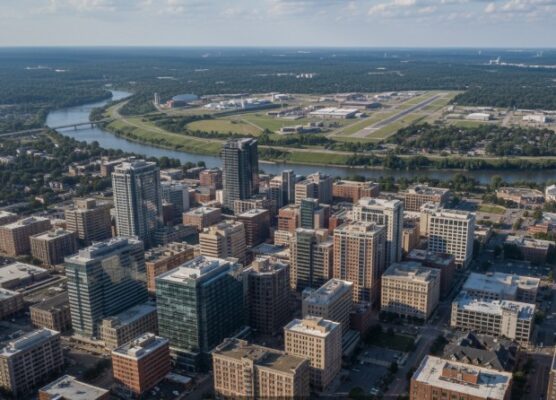
Huntsville does not feel like a sleepy Southern market that woke up by accident. The city’s rise is tied to payrolls, clear land-use pressure, and a deep bench of engineers, defense workers, contractors, and skilled trades. That is why real estate appreciation here keeps drawing buyers who want more than a warm story about “Rocket City.” They want to know whether the numbers still make sense. For local investors, relocating families, and homeowners watching equity build, the answer starts with aerospace demand. It also starts with caution. Huntsville is not a magic market where every ZIP code climbs on command. The better read is that regional property growth signals are being shaped by stable federal anchors, private space firms, and a city trying to build fast enough to keep prices from running away. The City of Huntsville reported nearly 5,000 new housing units in 2025, while also noting an 8.7% climb in home sales. That tells you something plain: demand is real, but supply is not standing still.
Why Real Estate Appreciation Follows Aerospace Payrolls in Huntsville
A house gains value for many reasons, but in Huntsville the first layer is income quality. Aerospace jobs are not only jobs; they are mortgage applications, rental demand, school choices, commute choices, and weekend spending. When a city has a base of workers who can buy homes without stretching as far as buyers in coastal markets, price growth can look calmer on the surface yet hold up better under stress.
Aerospace jobs create buyers before they create headlines
Most outside buyers notice Huntsville after a ranking, a relocation announcement, or a flashy space-company headline. Locals feel it earlier. They see out-of-state plates in apartment lots near Research Park. They hear from a neighbor whose adult child came back after landing a defense contract role. They notice that a starter home with a good commute to Redstone still gets attention even when mortgage rates scare off weaker buyers.
That pattern matters because aerospace jobs tend to pull in workers with clear career tracks. Engineers, machinists, program managers, analysts, and technicians often plan around stability. They may rent for one year, learn the commute map, then buy in Madison, South Huntsville, Meridianville, or near new north-side subdivisions. The purchase does not always happen at the peak of excitement. It happens after the family finds the right school zone or the single buyer gets tired of rising rent.
The non-obvious part is that job announcements do not need to be huge to move housing. A hundred new positions at a firm can ripple through contractors, suppliers, restaurants, childcare, and apartment demand. Blue Origin’s Huntsville presence is a good example: the company has more than 1,600 employees across Alabama and announced more than 100 additional jobs tied to thruster production.
Huntsville’s labor story also has a middle layer that casual investors miss. A new engineer may be the visible arrival, but the move often brings a spouse looking for work, a child entering school, a parent needing nearby care, and a household that spends in the same retail corridors where builders are planning the next phase. That is why one job can turn into more than one housing decision.
Huntsville’s aerospace base is broad enough to outlast one contract
A thin company town scares careful investors. If one employer pulls back, the whole market shakes. Huntsville is different because the aerospace and defense base is spread across federal agencies, Army commands, NASA work, prime contractors, subcontractors, research outfits, and advanced manufacturing firms. The official Redstone Arsenal page lists tenant groups tied to NASA Marshall Space Flight Center, the Missile Defense Agency, Army Materiel Command, aviation and missile work, testing, contracting, and more.
That gives the market a thicker floor. A buyer is not betting on one factory gate. They are betting on a cluster. NASA says Marshall Space Flight Center has been in Huntsville for more than six decades and lists 6,000-plus people connected to the center. That official NASA Marshall Space Flight Center profile helps explain why the city’s space identity is not branding fluff. It is payroll, procurement, and talent moving through the same streets as buyers and renters.
The broader employment base supports that view. Huntsville’s regional economic development group lists 276,500 average annual metro jobs for 2023 and a 2.1% unemployment rate for that year, well below the listed national comparison of 3.6%. Those figures are not a promise of future gains, but they show why households keep treating the area as a serious work market instead of a short stop.
Here is the catch. Clusters can still cool at the edges. A softer national housing market, higher insurance costs, or a wave of new apartments can slow rent growth. That does not erase the aerospace advantage. It means the best buyers stop chasing slogans and start asking which submarkets sit closest to steady demand.
How Redstone Arsenal Growth Turns Jobs Into Housing Pressure
Redstone is not a distant employer campus with weak ties to daily life. It is a daily traffic pattern, a career ladder, and a reason families study commute times before they study countertops. Redstone Arsenal growth matters because it links federal spending to local housing choices in a way that private boomtowns often cannot match.
Commute math shapes where demand lands first
People moving to Huntsville rarely ask only, “What can I afford?” They ask, “Can I get to Gate 9 without hating my mornings?” That one question changes the map. It helps explain why neighborhoods with practical access to Redstone, Cummings Research Park, downtown, and the airport corridor can hold attention even when online charts call the wider market cooler.
A family relocating from Colorado Springs for space work may rent near Madison at first, then buy west or south once they understand the school calendar and the drive. A contractor who travels through Huntsville International Airport may prefer a townhome near Town Madison or a low-maintenance home close to I-565. A civil servant who wants older trees and less new-build sameness may look toward South Huntsville.
The quiet insight is that commute value can beat square footage. Buyers will forgive a smaller yard if the daily route protects their time. That is why Huntsville neighborhood investment ideas should start with employment routes, not only median prices.
Commute pressure also changes what counts as “affordable.” A cheaper house that adds 25 minutes each way may cost less on paper but more in daily patience. A higher-priced home with a clean drive to Redstone can feel rational to a worker who expects long project cycles and does not want traffic to own the family schedule. That math shows up in offers.
Federal anchors make demand steadier, not risk-free
Redstone Arsenal growth also has a psychological effect. Federal anchors can make buyers feel safer because the work is tied to national defense, aerospace programs, and long planning cycles. U.S. Space Command has already opened its first permanent building at Redstone, and Axios reported that the long-term plan is for 1,800 staff in Huntsville as headquarters plans move toward 2031.
That kind of timeline matters. It gives builders, landlords, and sellers a longer runway than a single-year hiring burst. It also gives cautious families time to relocate in phases. Some rent first. Some keep a house in another state while testing Huntsville. Some buy only after a spouse finds work. Each step feeds demand without creating one loud stampede.
Still, federal anchors do not remove local risk. If too much new rental inventory hits the same pocket, landlords may need sharper pricing. If road projects lag behind subdivisions, buyers may push outward or pause. If a property needs repairs, a stable job base will not save a bad inspection. Huntsville rewards discipline. Hype gets expensive fast.
The safer bet is not “buy anything near the Arsenal.” It is to read the chain from agency to worker to household. Which roles are coming? Which salary bands are likely? Which locations fit those households without forcing them into a painful commute? The closer your property answer gets to those questions, the less you depend on market noise.
What the Huntsville Housing Market Is Saying Beneath the Surface
The Huntsville housing market is not sending one clean signal. That is the part many quick summaries miss. Supply has improved in some places, sale prices are not racing every month, and buyers have more room to negotiate. At the same time, population growth and high-skill employment still support long-term property demand.
Current numbers show strength with a cooler face
Zillow’s May 31, 2026 data listed the average Huntsville home value at $291,155, up 0.5% over the past year, with homes going pending in around 19 days. That is not a wild surge. It is more like a market catching its breath after a long climb.
Realtor.com painted an even cooler short-term picture for May 2026: about 2,200 active listings, a median listing price near $359,900, a median rental price of $1,600, and a buyer’s market label with homes selling at about 98% of asking price. That does not sound like a city where sellers can name any number and win.
This is where buyers should pay attention. A market can be cooler and still have a good long-term setup. In fact, that may be healthier. When aerospace jobs support demand but new listings give buyers choices, the result can be less frenzy and better underwriting. A calm purchase beats a bidding-war mistake.
Population keeps the cooler data from looking weak. The City estimated Huntsville at 249,102 residents as of July 1, 2025, up 15.9% since the 2020 Census. It also translated that into more than 34,000 new residents over five years, or about 18 people choosing Huntsville each day. That is not background trivia. It is future demand looking for roofs.
New construction is both relief and competition
Huntsville is not ignoring growth. The city said nearly 5,000 new housing units came online in 2025, and 14 apartment complexes with more than 3,200 units were under construction. It also approved 1,892 single-family lots, the highest number since 2007.
For renters, that supply can mean more options. For landlords, it can mean more competition. For buyers, it can create a window where builders offer incentives and resale sellers must price with care. The Huntsville housing market is not one simple ladder where every rung gets more expensive at the same pace.
The counterintuitive lesson is that more building can protect long-term value. If Huntsville failed to build, affordability could break and workers would push farther out. By adding homes, the city may slow some short-term price spikes while keeping the employment engine connected to the housing base. That is not bad for owners who care about durability over drama.
New supply also sorts winners from weak properties. A clean resale with shade, storage, and a better location can beat a new build with a longer drive. A tired rental with old systems may lose to a fresh apartment that offers predictable costs. Owners who make smart repairs before listing are not fighting the city’s growth. They are meeting the new standard it creates.
Where Buyers and Investors Should Look Beyond the Rocket City Hype
Once you understand the job base and the current housing signals, the next step is local judgment. Huntsville is not one market. It is a set of small decisions: older ranch or new build, Madison City schools or more space in Limestone County, near Redstone or farther out for price relief, rental yield or owner-occupant resale strength.
The best opportunities often sit near friction
Easy stories attract easy money. Harder pockets can reward patient buyers. A neighborhood with road work, older housing stock, or uneven curb appeal may scare off shoppers who only want polished listings. Yet those same areas can gain if they sit near job routes, retail upgrades, or school demand.
North Huntsville gives one real example. The City noted that 2025 housing starts were strongest near Wade Mountain, including developments such as Jaguar Hills, Spragins Hollow, and Beacon Place. It also pointed to rising renovation activity in Meadow Hills and Rolling Hills.
That does not mean every north-side property is a bargain. Some homes need too much work. Some streets will take years to mature. The point is sharper: growth often appears messy before it appears obvious. Buyers who wait for every sign to look perfect may end up paying the finished price.
Friction can also be financial. A house with an aging roof, dated flooring, or an awkward layout may sit while cleaner homes draw quick tours. If the location is right and the repairs are priced honestly, that hesitation can create room for a buyer who has cash reserves and patience. The discount must be earned, not assumed.
Match the property to the worker, not the headline
Aerospace jobs do not create one kind of tenant or buyer. A young engineer may want a low-maintenance rental near restaurants. A defense family may want a fenced yard and a school path. A contractor may value quick highway access over walkability. A senior program manager may pay more for space, quiet, and a short drive to Redstone.
That means an investor should not buy “near aerospace” as a vague idea. They should decide who the property serves. A small townhome near job corridors may fit a traveling professional. A clean three-bedroom with a garage may fit a relocating family. A dated house near an improving retail corridor may fit a buyer who wants equity through repairs.
This is where rental property due diligence becomes more useful than another market ranking. Check rent comps against new apartment supply. Walk the block at different times. Price repairs before you fall in love. Study how long similar homes sit, not only what they list for. Huntsville gives you a powerful demand story, but the property still has to carry itself.
The same thinking helps owner-occupants. Do not buy the largest home you can stretch into because the city is growing. Buy the one that gives you a sound payment, a defensible location, and an exit path if life changes. Huntsville’s upside is strongest when your personal budget can hold through a slow season.
Conclusion
Huntsville’s housing story works because it is built on more than buzz. The city has federal anchors, space firms, defense contractors, skilled trades, and a growing population that continues to reshape where people live. Yet the smarter view is not blind optimism. Current market data shows more buyer choice and flatter short-term price movement, which means discipline matters. Real estate appreciation in Huntsville is most convincing when you connect a property to durable income, practical commutes, and real neighborhood demand. The best buyers will not chase every listing with a rocket in the description. They will look for homes that serve the people actually arriving for work, training, contracts, and family life. If you are buying, selling, or investing here, treat the aerospace boom as the starting point, then do the block-by-block work that separates a smart move from an expensive guess.
Frequently Asked Questions
Is Huntsville still a good real estate market for investors in 2026?
Yes, but it is more selective than the old boom headlines suggest. Job growth, federal anchors, and aerospace demand still help the city, while higher inventory gives buyers more room. The better opportunities are properties tied to clear tenant demand, sound repairs, and practical commutes.
How do aerospace jobs affect Huntsville home values?
They bring stable buyers and renters with incomes that can support housing demand. Engineers, defense workers, technicians, and contractors often rent first, then buy after learning the area. That creates a steady path from hiring to household formation, especially near Redstone and major job corridors.
Is the Huntsville housing market overpriced now?
Not across the board. Some listings are priced ahead of the market, while others look fair because sellers face more competition. Buyers should compare recent sold prices, repair needs, builder incentives, and days on market before deciding whether a home is overpriced.
Where should aerospace workers live in Huntsville?
Good choices depend on commute, schools, budget, and lifestyle. Madison, South Huntsville, downtown-adjacent areas, north-side growth pockets, and communities near I-565 can all make sense. The best fit is the place that protects daily time without forcing a risky payment.
Are rental properties in Huntsville still profitable?
They can be, but rent estimates need care. New apartments create competition in some submarkets, while family rentals near job routes may stay firm. Investors should underwrite with conservative rent, realistic vacancy, maintenance reserves, and insurance costs before making an offer.
What makes Redstone Arsenal so important to Huntsville housing?
It concentrates federal, defense, space, testing, logistics, and contractor work in one employment hub. That pulls workers from across the country and shapes where they want to live. Homes with practical access to Redstone often gain attention from buyers who value time and stability.
Will new construction hurt Huntsville property values?
New construction can slow price spikes, but that is not always bad. More supply helps affordability and keeps workers from being priced out. Existing homes still compete well when they offer location, mature neighborhoods, better lot sizes, or upgrades that builders charge extra for.
What should first-time buyers watch in Huntsville?
Focus on payment comfort, commute, inspection findings, and resale appeal. Do not buy only because the city is growing. A good first home should fit your life now, leave room for repairs, and sit in a location future buyers or renters will understand quickly.